

Psychosocial health in foot care
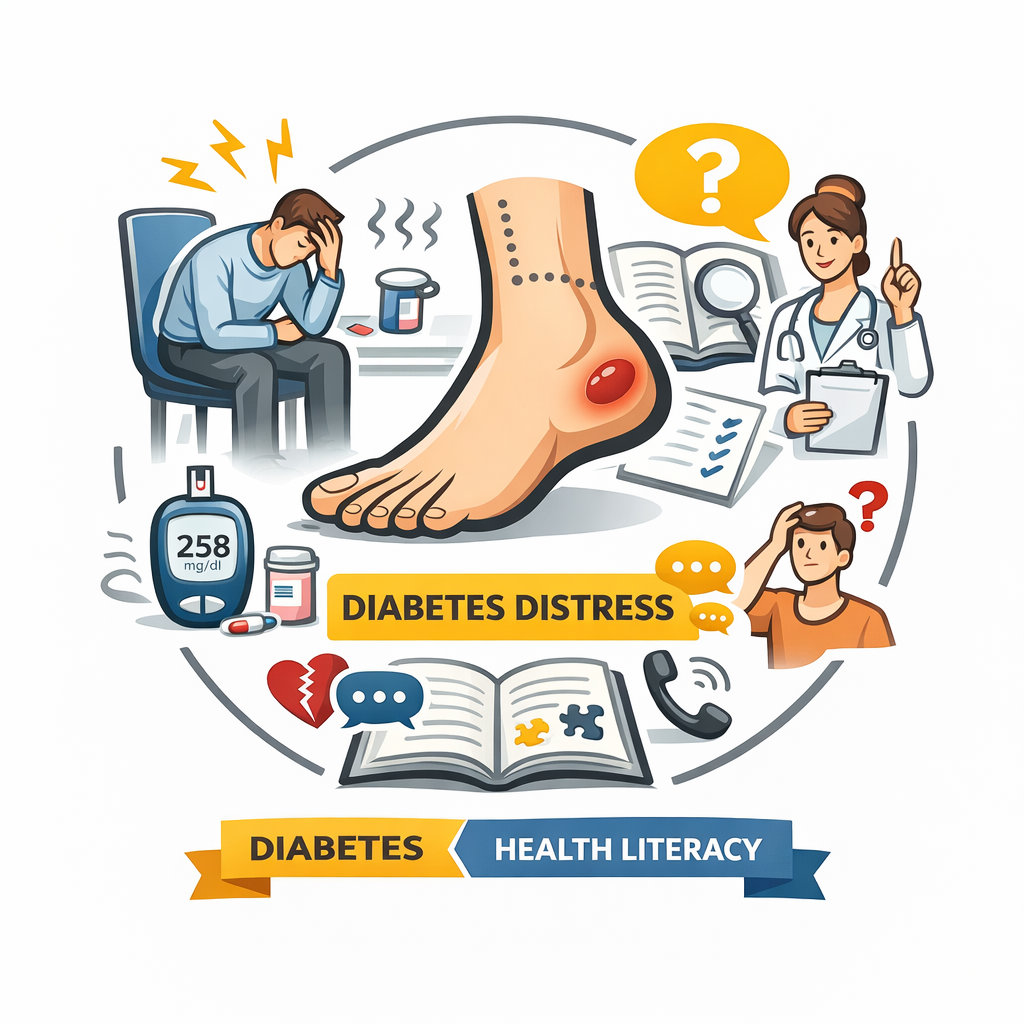
For people living with diabetes, foot ulcers and amputations are influenced not only by medical problems, but also by distress related to diabetes and by difficulties understanding information about care and self-care. Alice Cardon studies how these factors play a role in diabetic foot problems, to better understand what people need to help prevent foot ulcers and amputations.
“What drives me is the wish to better understand why it is so difficult for some people with diabetes to prevent foot problems. In care, a lot of attention goes to medical risk factors, such as nerve damage, circulation problems, foot deformities, and previous wounds. Those factors are important, but they do not explain everything. Living with diabetes can be very distressing, and not everyone finds it equally easy to understand and use information about care and self-care in daily life. That can affect self-care, communication with healthcare professionals, and ultimately also the risk of foot ulcers and amputations.”
“That is why my research focuses on two things that still receive too little attention: diabetes distress and health literacy. Diabetes distress refers to the emotional burden that comes with living with diabetes. The definition of health literacy is how well someone can understand and use information about health and care in daily life.”
Looking beyond the numbers
“I want to get a better picture of how much influence these factors have and what people need in response. That is why I look not only at data, but also at the experiences of people with diabetes and healthcare professionals. I combine large datasets and self-reported data with qualitative research, so that I can see not only that differences exist, but also better understand where they come from.”
“Ultimately, I hope this will lead to something useful in practice. That could be, for example, an information tool or decision aid for healthcare professionals or patients. For healthcare professionals, it could help with questions such as: how do you adapt your communication to what someone understands, what do you do if you notice that someone is experiencing a lot of emotional distress because of diabetes, and how do you bring that up during a consultation? For people with diabetes, it could lead to clearer information and support that is better matched to their needs.”
“The impact I hope to make lies in care that better matches what a person can manage and what they need. If healthcare professionals can recognise earlier that distress or difficulty with information is playing a role, they can respond more effectively. That can help people with self-care and contribute to preventing foot ulcers and amputations.”
“Within DIALECT, we are currently working on the next important step: a qualitative study on psychosocial needs in diabetic foot care. The results should help determine what kind of tool, support, or recommendations may come out of this work, with the goal of having a practical impact on clinical care.”