

Making shear forces visible to improve foot ulcer prevention
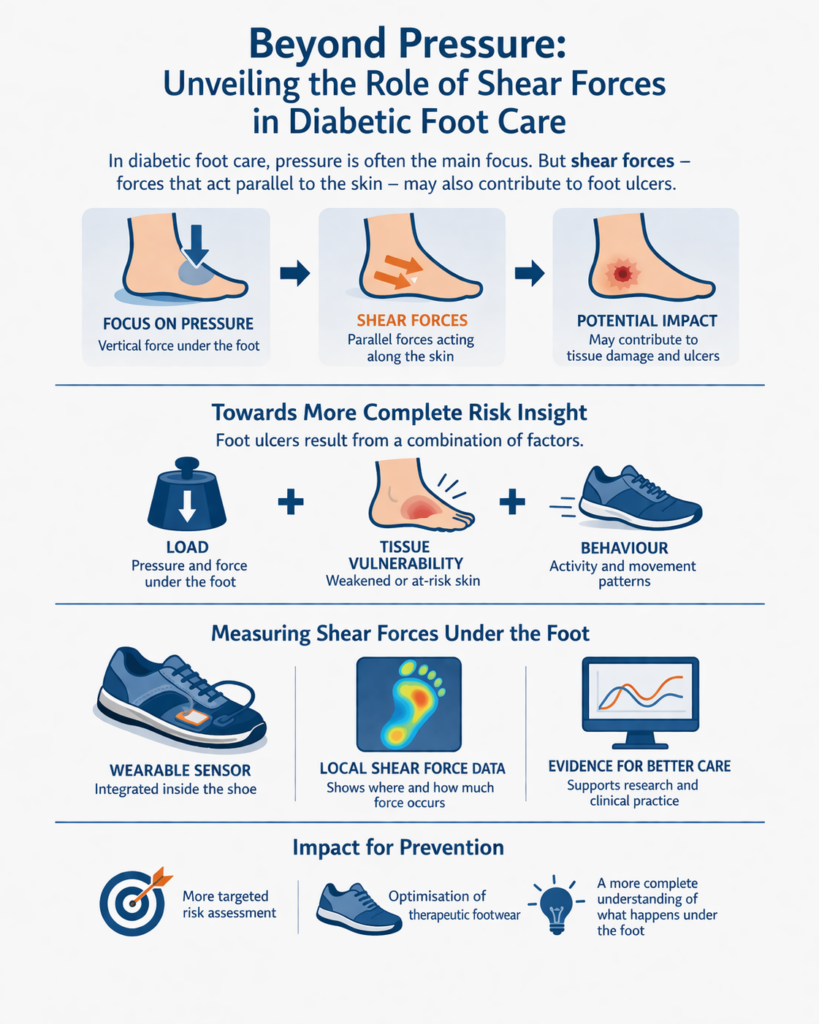
In diabetic foot care, the focus is often on pressure under the foot. But another type of force may also play a role in the development of wounds: shear forces. Onur Okcu aims to make this largely invisible factor measurable, and in doing so contribute to more targeted prevention of foot ulcers and amputations.
“What fascinates me is that in current foot care we mainly focus on pressure, while we actually don’t fully understand what shear forces are doing. These are forces that act parallel to the skin and may contribute to tissue damage. We suspect they play a role in the development of foot ulcers, but we are not yet able to measure them properly in daily life. That means part of the story is still missing.
My goal is to make that visible. Not only by studying whether shear forces actually contribute to ulcer development, but also by developing a measurement method that is reliable enough to be used in research and eventually in clinical practice. Because only when you can measure something properly, you can start to understand it, and act on it.”
Towards more complete risk insight
“What makes this complex is that foot ulcers are almost never caused by a single factor. It is always a combination of load, tissue vulnerability, and behaviour. Pressure is important, but it may not be the whole picture. If shear forces play a role as well, then we are currently missing information that could be relevant for prevention.
That is why we are developing a sensor that can be worn inside the shoe and measure local shear forces under the foot. This is technically challenging, because you not only want to know how much force is present, but also exactly where it occurs. That local information is essential, because ulcers also develop locally.
Ultimately, I hope these measurements will add something to what healthcare professionals already do. For example, in optimising therapeutic footwear or assessing risk. It may turn out that certain footwear adjustments influence not only pressure, but also shear forces, or perhaps they don’t. Those are insights we currently don’t have.
The impact I hope to make lies in creating a more complete picture. Not to replace existing knowledge, but to add to it. If we better understand the forces acting under the foot, we may be able to recognise earlier where things are going wrong and intervene more precisely. In the end, it’s about improving prevention, and for that, we first need to truly understand what is happening under the foot.”