

Smarter insole design for better pressure relief
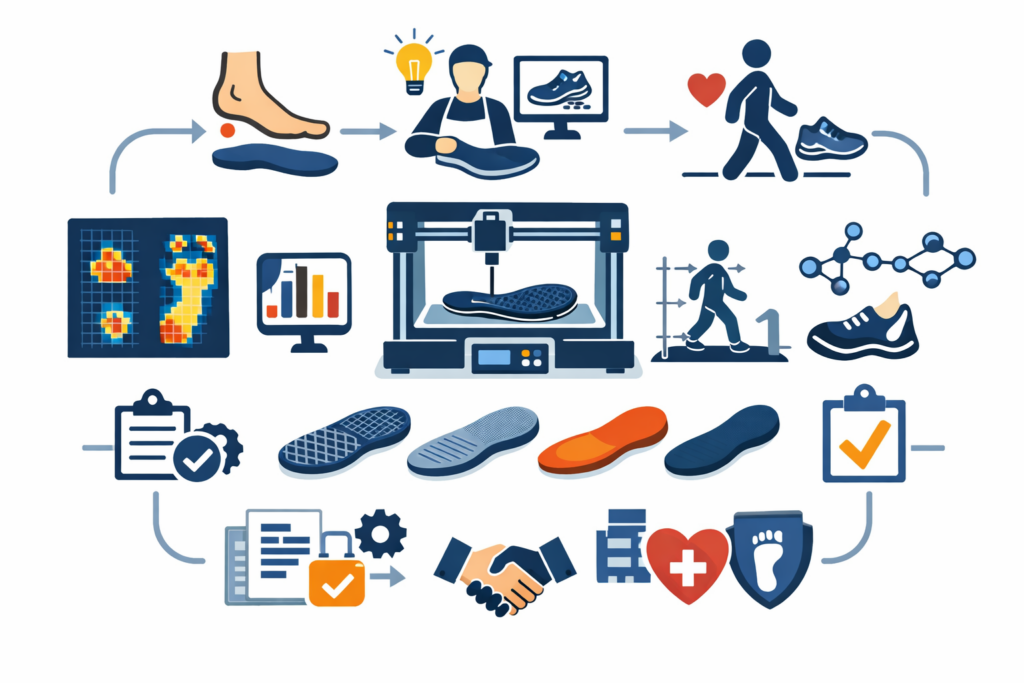
Custom-made insoles are intended to reduce pressure under the diabetic foot, yet in practice their effectiveness varies and they are not always worn consistently. Niloofar Sedighi investigates how insoles can be designed more precisely using biomechanical data, digital design methods and 3D printing, so they not only perform well technically but also fit better into daily life.
“What drives me is that an insole only has real value if it reduces pressure where it actually matters and works well in daily life. In practice, insoles are still often made and adjusted based on experience and manual craftsmanship. That expertise is important, but it also means outcomes can vary and it is not always clear why a design works or does not work. I want to move towards an approach where biomechanical data are used much more directly to support design decisions.”
From experience to data-driven design
“In my research, I look at how pressure measurements and other biomechanical data can be used to determine what kind of design is needed for a specific foot. This includes questions such as: which materials are needed, how much softness or stiffness is required, and how an insole should be structured locally to offload high-risk areas. My goal is not only to improve the insole itself, but also to make the design process more transparent, reproducible and scalable.
Additive manufacturing, or 3D printing, plays an important role in this. It offers far more design freedom than traditional production methods. You can create complex shapes and vary structures and stiffness locally in ways that are difficult to achieve otherwise. This opens up new possibilities to truly personalize insoles, not just based on foot shape, but also on pressure patterns and the biomechanics of how someone walks.
For me, this project is therefore not only about developing a better product. It also shows what becomes possible when clinical insight and technical innovation are combined. I hope to demonstrate that a data-driven approach can lead to insoles that are not only effective, but also more consistent, scalable and potentially more sustainable.”
Not only technically effective, but truly usable
“At the same time, reducing pressure is not the only goal. An insole can perform well biomechanically, but if it is not comfortable or does not fit well in a shoe, it is less likely to be worn. That is why I also focus on usability. I want to understand how technical performance and user experience interact, because that combination determines whether an intervention actually works in practice.
Within DIALECT, my aim is not only to complete the study and confirm whether the design achieves the intended pressure reduction, but also to clearly document the development process. I want to create a structured and reproducible design framework, so others can understand how to move from biomechanical data and digital optimisation to an effective insole. This should be useful for clinicians, technicians and companies who want to apply or further develop this approach.
Ultimately, I hope this work contributes to a shift in diabetic foot care. Moving away from mainly adjusting insoles afterwards, towards designing them more precisely from the start based on measurable data. If we better understand how insoles can reduce harmful pressure while remaining usable in daily life, we can take an important step in preventing foot ulcers and amputations.”