
Protecting the vulnerable phase after healing
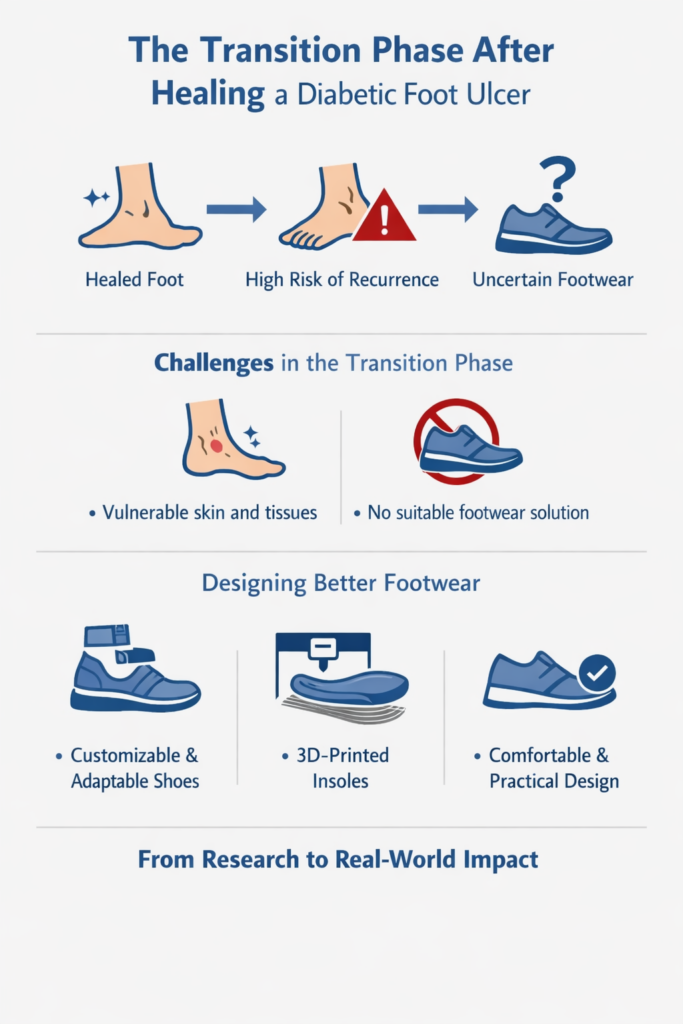
en nog een: The period after a diabetic foot ulcer has healed may be one of the most underestimated phases in care. This is exactly when the risk of a new wound is high, while it is still unclear which footwear best protects the foot during this transition. Kamran Shakir focuses on this critical phase, aiming to better support the step from healing to safe mobility.
“What stands out to me is that we put a lot of emphasis on healing an ulcer, but much less on what comes after. Yet this is exactly the period in which the risk of recurrence is high. The skin and underlying tissues are still vulnerable, while people start becoming more active again. That makes it essential to manage the load on the foot properly.
At the same time, we still don’t know which type of footwear is most suitable in this transition phase. There is no specific solution that is truly designed for this moment. That makes it difficult to guide patients effectively. You want to avoid both overloading the foot too quickly and unnecessarily limiting someone’s mobility.”
Designing footwear for the transition phase
“That is why my research focuses on developing and validating footwear that specifically supports this transition phase. I look at how existing designs perform, for example in terms of pressure under the foot and usability, and where their limitations lie. At the same time, I work on new solutions, such asdriven by modular shoe components and 3D-printed elements, which allow for better adaptation to the individual foot.
What matters is that footwear is not only technically effective, but also usable in daily life. If something is not comfortable or does not fit a person’s situation, it is less likely to be worn and loses its effect. That is why we look not only at biomechanics, but also at user experience. Ultimately, I aim to develop a footwear solution that can be used immediately after healing and helps to gradually and safely rebuild load. Not only in a research setting, but in real clinical practice.”
From local need to wider impact
“My motivation is also shaped by the situation in my home country, India, where many people live with diabetes and access to care and appropriate devices is not always guaranteed. I want to contribute to solutions that are not only effective, but also affordable and accessible. At the same time, I find it important to raise awareness and share knowledge, especially in regions where information is still limited.
What I hope to achieve is that this transition phase receives more attention in care, and that we better understand what the foot needs during this period. Because if we make the right choices at this stage, we may be able to prevent many new ulcers and amputations.”