

Background
Anyone working in diabetic foot care knows that the period after a foot ulcer has healed is often still a time of high risk. The wound may be closed, but that does not necessarily mean that the tissue underneath has fully recovered. In fact, many ulcers return: up to 40% within one year and up to 65% within five years. This early phase after healing, also called remission, is therefore a crucial period in which the foot may still be vulnerable.
In daily practice, it is often difficult to judge how well the tissue has recovered. A wound that looks healed on the surface may still have weaknesses in the skin and soft tissue underneath. Changes in tissue thickness, stiffness and the way the foot is loaded are thought to play a role in whether an ulcer returns, but we still know too little about how these factors develop over time.
This project focuses on that vulnerable period after healing. Alessandro Vicentini, PhD candidate at Amsterdam UMC, studies how plantar soft tissues recover in the first months after wound closure to improve understanding of why some ulcers recur and how care can better respond to that risk.
Approach
The DC4 project studies tissue recovery after ulcer healing using a combination of imaging, pressure measurements and other tissue assessments. The aim is to build a clearer picture of what happens in the foot between wound closure and the first months of remission.
One part of the project focuses on the structure and mechanical behaviour of the plantar soft tissues. This includes tissue thickness, stiffness, elasticity and the way the tissue responds to loading. To study this, the project uses advanced imaging techniques such as weight-bearing CT, MRI and magnetic resonance elastography, together with other methods such as indentometry and plantar pressure analysis.
These measurements are carried out over time: at the moment of healing, and again during follow-up in the weeks and months afterwards. This makes it possible to study how tissue properties change during remission and whether certain patterns may be linked to a higher risk of ulcer recurrence.
A key part of the project is that it combines different types of information. Imaging, biomechanical measurements, histological data and clinical information are brought together to better understand tissue recovery after ulceration. In that way, the project goes beyond looking only at whether the skin has closed, and instead looks more broadly at the structure and mechanical properties of the tissue during healing and recovery.
From insight to care that fits better
The strength of this project lies in making the period after healing more visible. In practice, this is often a grey area: the wound is closed, but the risk is not gone. Better understanding of tissue recovery may help healthcare professionals judge more clearly when tissue is still vulnerable and when the risk of recurrence remains high.
That matters for daily care. It can support decisions about follow-up, pressure relief, and how risk is assessed in the period after healing. It may also help create a more precise and more objective view of healing, instead of relying only on whether the skin surface appears closed.
In the longer term, the knowledge from this project may contribute to better ways of measuring tissue health after ulcer healing and to stronger prediction of recurrence risk. That could help support more personalised prevention strategies and, ultimately, contribute to reducing the risk of new ulcers and amputations.
Our Research Team
The project is being carried out at Amsterdam UMC, one of the leading centres in the world for clinical, biomechanical and radiological research in diabetic foot disease, especially in the prevention of foot ulcers and amputations. The doctoral candidate works within a multidisciplinary team of clinicians, movement scientists and radiologists, and also collaborates with two other DIALECT doctoral candidates in Amsterdam UMC who focus on specific deformities and footwear development for ulcer prevention.
The research is embedded within the Department of Rehabilitation Medicine, which has advanced facilities for biomechanical research, including a motion analysis laboratory and plantar pressure measurements, and is closely connected to the outpatient diabetic foot clinic. It is also linked to the Department of Radiology, where advanced imaging techniques such as high-field MRI, weight-bearing CT, dual-energy CT and ultrasound are available. The project is also part of the Amsterdam Movement Sciences research institute, where collaboration exists with partners in movement sciences, tissue engineering, musculoskeletal disease and sports.
As part of the project, the doctoral candidate also undertakes training periods at the Istituto Ortopedico Rizzoli in Bologna and at Steno Diabetes Center Copenhagen. These secondments contribute to the project’s multidisciplinary approach and strengthen its relevance for innovation in diabetic foot care.
Amsterdam University Medical Centers
Amsterdam UMC is the largest hospital and one of the leading medical research institutions in the Netherlands, with more than 13,000 employees. It combines the former Academic Medical Center and Vrije Universiteit Medical Center. The location at Meibergdreef is part of the University of Amsterdam.
Around 2,500 staff members are fully or partly involved in medical research. Amsterdam Movement Sciences is one of the eight research institutes within Amsterdam UMC and brings together research on many different aspects of movement, both fundamental and clinical. Amsterdam UMC also offers high-quality core facilities, including a motion analysis lab, advanced imaging techniques, and medical physics support.
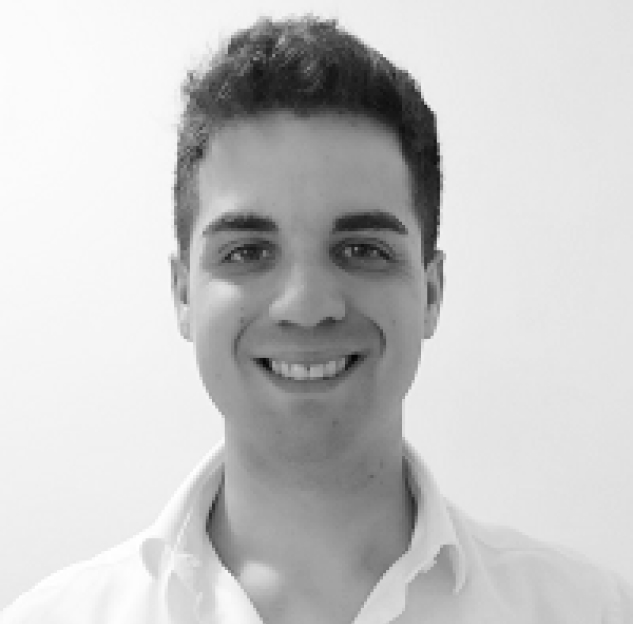
Doctoral Candidate
Alessandro Vicentini
Recruiting organisation: Amsterdam University Medical Centers, location University of Amsterdam, Departments of Rehabilitation Medicine and Radiology, Meibergdreef 9, 1105AZ Amsterdam, The Netherlands.
Hosts: Prof. dr. Sicco A. Bus, Prof. dr. Mario Maas
Duration: 42 months
Secondments: Istituto Orthopedico Rizzoli, Bologna, Italy (2 months); Steno Diabetes Center, Copenhagen, Denmark (2 months)
Summary: Foot ulcer recurrence risk in people with diabetes is highest in the early period after healing. This project aims to investigate how the structural and mechanical properties of plantar soft tissues—such as tissue geometry, stiffness, and elasticity—change during this critical remission phase. The doctoral candidate will conduct longitudinal assessments using advanced imaging techniques and plantar pressure analysis to evaluate tissue composition and biomechanics at ulcer healing and during follow-up. By integrating histological, morphological, and mechanical data, the project will provide a deeper understanding of the tissue-level mechanisms underlying ulcer recurrence. These insights are expected to contribute to the development of a comprehensive biomechanical model of plantar tissue recovery, advancing knowledge in diabetic foot disease and informing more effective prevention strategies.